
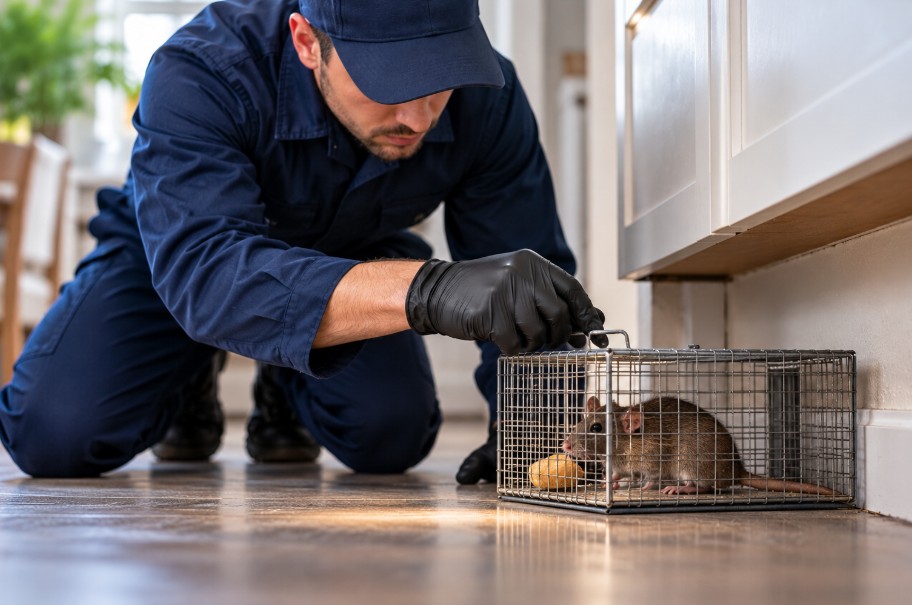
Rodent Trapping in Lincoln, NE — Rats, Mice and Squirrels Caught and Removed
Setting a trap is easy. Catching every rodent in the house is not. Mice dodge traps placed an inch off their route, rats ignore new objects for days, and a squirrel in the attic has rules about when and how it can be caught in Nebraska.
Lincoln Rodent Control Co. is a licensed and insured trapping service based in University Place. We set professional traps where your rodents actually travel, come back to check them, carry every catch away, and keep at it until the activity stops. Day or night, we're usually at your door within about 60 minutes.
Is Trapping the Right Fix for Your Problem?
Trapping is the right call when:
- Rodents are already living inside — in the kitchen, walls, basement, attic or garage
- You want them gone without poison in the house
- You have kids, pets or a food business and need to know exactly where every device is
- You want proof — a count of what was caught — instead of wondering
Trapping alone won't be enough when:
- New rodents keep arriving through an open gap. We'll trap the ones inside and tell you where the gap is.
- The animal is a protected species, like a southern flying squirrel. We'll explain the legal options.
- The rodents are dead and you only need cleanup, not trapping.
Why We Trap Instead of Poisoning Indoors
Nebraska Extension recommends trapping for homes and other sensitive places, and so do we. Here's why it's our default inside Lincoln houses:
- No dead rodents in your walls. Poisoned rodents often crawl into a wall void or under a floor to die, and the smell can last for weeks. A trapped rodent comes out with us.
- You know it worked. Every catch is counted, so we can tell when activity is truly over instead of guessing.
- Nothing toxic where kids and pets live. Our traps sit inside locked stations or in places children and pets can't reach.
- No risk to owls, hawks and pets outdoors from eating a poisoned mouse.
When a Lincoln Home Needs Professional Trapping
You've Been Setting Traps and They Keep Filling Up
If you catch a mouse every few days for weeks, the population is still breeding and more are coming in. A house mouse can have 5 to 10 litters a year, so a handful of catches rarely means the problem is over.
Your Traps Sit Untouched but the Noises Continue
That usually means the traps are in the wrong place, or you're dealing with rats, which avoid unfamiliar objects for days at a time.
Something Is in the Attic
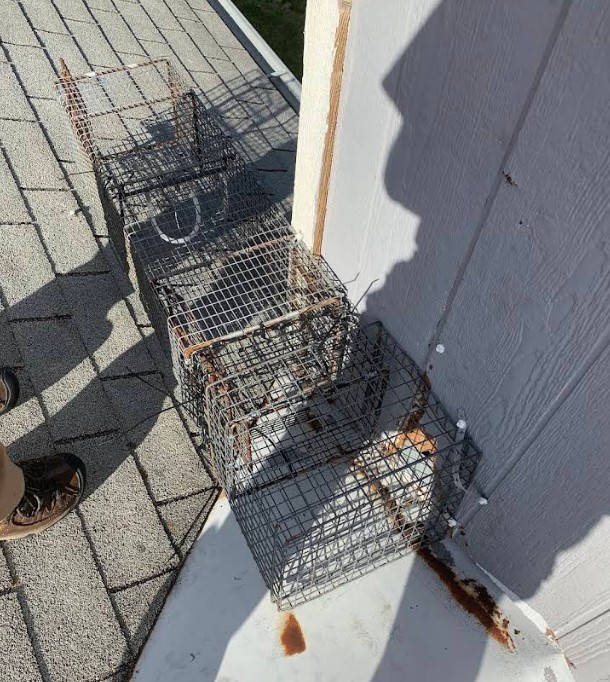
In Lincoln, that's most often mice or fox squirrels. Squirrel trapping involves Nebraska rules on release and timing, and it should be done from the roofline, not by crawling around an attic.
Rats Around the Garage, Shed or Foundation
Burrows by the slab, chewed garage door corners, droppings by the bird feeder or dog run — rats rarely solve themselves, and they need more traps and more patience than mice.
It's October and the Mice Just Showed Up
As Lincoln nights drop into the 30s and below, mice move indoors looking for warmth. Trapping early, before they settle and breed inside, shortens the job.
Lincoln Animal Control Can't Help With This
Lincoln Animal Control handles pets, strays, animal bites and rabies concerns. It isn't set up to trap mice in your kitchen or rats under your garage. That's what a private trapping service like ours is for.
Rat and Mouse Trapping in Lincoln — and the Other Rodents We Catch
Each species behaves differently around a trap. That's the main reason professional trapping works when a few store-bought traps don't.
House Mice
The most common rodent we trap in Lincoln homes. Mice are curious, so they often find a trap the first night, but they travel short distances, so a trap a few feet off their route can sit empty. We set many traps close together along walls and behind appliances, often in pairs, and keep resetting where catches happen.
Deer Mice
White belly, white feet, big eyes. Deer mice turn up most in garages, sheds, campers and homes on the edge of town and on acreages. They trap much like house mice, but they're the main carrier of hantavirus, so we handle every catch, trap and nest with gloves and disinfectant.
Norway Rats
The only rat species you're likely to meet in Lincoln — Nebraska is outside the roof rat's range. Rats are wary of anything new and may avoid a trap for up to two weeks. We set rat traps unarmed at first so they get used to them, then arm them once rats are feeding. We use larger traps than for mice, anchor them so a rat can't drag them off, and set more than seem necessary.
Fox Squirrels
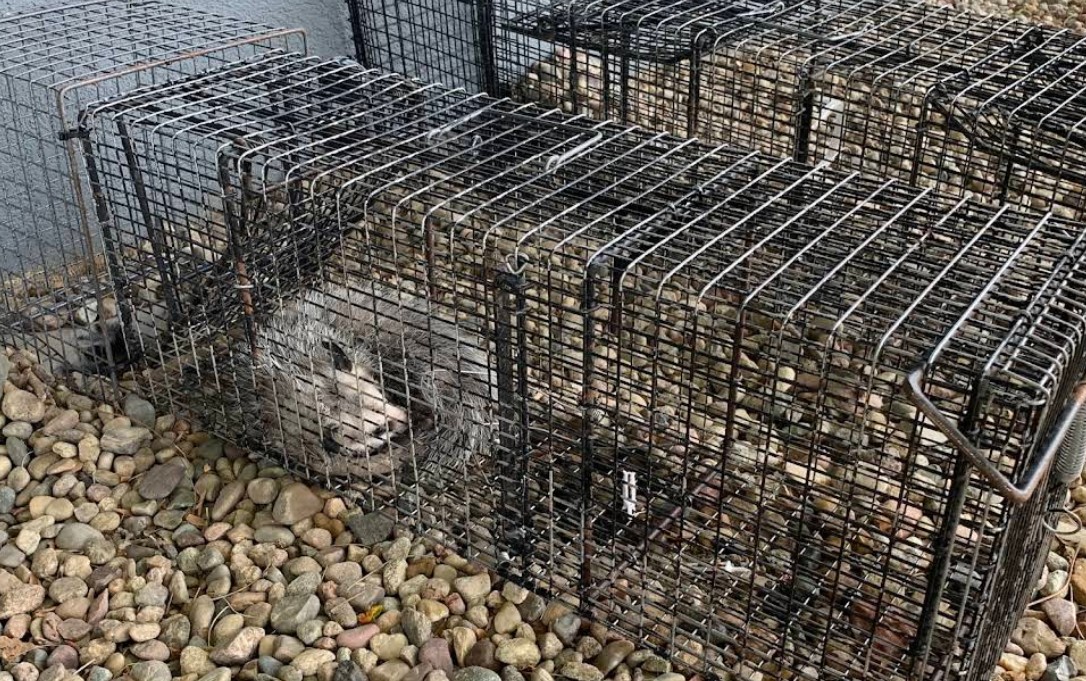
The rust-colored squirrels in Lincoln's older neighborhoods are the ones that end up in attics. We trap them with cage traps mounted near the entry hole on the roofline, not inside the attic. Squirrel trapping in Nebraska has specific rules on release and timing (see "Trapping Safely and Legally in Nebraska" below).
Voles
The short-tailed rodents that cut runways through lawns after snowmelt and chew bark on young trees. Nebraska has prairie and meadow voles statewide. We set traps directly across their runways, two or three per runway, and cover them so birds and pets can't reach them.
Other Yard Rodents
Case by case, we also trap thirteen-lined ground squirrels, pocket gophers, chipmunks and woodchucks that are damaging lawns, gardens or foundations, following Nebraska Game and Parks rules for each.
The Traps We Use and Why
| Trap | Best for | Why we use it |
|---|---|---|
| Mouse snap traps | House mice, deer mice, voles | Fast and humane when set correctly; easy to see results |
| Rat snap traps | Norway rats | Larger trigger and stronger bar sized for rats; anchored so they can't be dragged off |
| Locking trap stations | Mice and rats near kids, pets or outdoors | A snap trap enclosed in a tamper-resistant box — only a rodent can reach the trigger |
| Multi-catch traps | Heavy mouse activity in basements, garages and outbuildings | Catch several mice without resetting; good along long runs of wall |
| Cage traps | Fox squirrels, woodchucks | Required for live capture; sized at least 18 inches long for squirrels |
| Covered runway traps | Voles in lawns and gardens | Snap traps set across the runway inside a cover so birds can't get in |
Methods We Don't Use in Your Living Space
- Glue boards in living areas. They're slow, they frighten trapped mice into urinating — spreading germs — and they can catch pets and birds. We keep them out of your home except in rare, controlled cases.
- Live-catch traps for mice and rats. Releasing them outside just means they come back, and handling live rodents increases disease risk.
- Ultrasonic and "repeller" devices. There's little evidence they work on rats or mice.
How We Bait
We match bait to the animal and the season: peanut butter, nut spreads or chocolate for mice; peanut butter, nuts, bacon or hot dog for rats; corn, nuts or fruit for squirrels; peanut butter and oatmeal for voles. In some spots we use no bait at all — a trap set squarely across a runway catches rodents just by being in the way.
Where We Set Traps in Lincoln Homes
Rodents travel along edges — baseboards, joists, pipes and foundation walls — and they avoid open floor. We set every trap on those routes, with the trigger facing the wall so a rodent running the edge has to cross it.
Kitchens and Pantries
Behind and beside the refrigerator and stove, under the dishwasher, in the cabinet under the sink, and in the toe-kick space beneath lower cabinets. Kitchen traps always go inside closed stations or out of sight and reach.
Basements and Crawl Spaces
On top of the foundation wall along the sill plate, beside the water heater and furnace, along stored boxes, and next to floor drains and sump pits. In the stone and brick basements of older Lincoln homes — common in Everett, Near South and Havelock — mice run the ledges and gaps in the foundation itself, so that's where the traps go.
Attics
For mice, along the top plates near the eaves and beside tunnels in the insulation. For squirrels, we trap outside at the entry hole on the roofline instead.
Garages
In the corners by the overhead door, along the wall shared with the house, behind shelving, and near stored birdseed, grass seed and pet food. Garage traps go in locking stations if kids or pets use the space.
Utility and Laundry Rooms
Where gas lines, water lines and the dryer vent pass through the wall, and around the furnace and its cold-air return.
Inside Walls and Ceilings
When mice live inside a wall, we trap at the points where they come out — behind appliances, under cabinets, or at a gap by a pipe — rather than opening up your drywall.
Outside the House
Rat traps in anchored stations along the foundation, by burrows under stoops and slabs, beside sheds, woodpiles, compost bins, bird feeders and dog runs. Vole traps go in lawn runways and around young trees.
Outbuildings, Vehicles and Equipment
On acreages and larger lots: sheds, barns, pole buildings and detached garages, especially where feed, seed or stored vehicles and mowers give mice a place to nest.
How Our Rodent Trapping Service Works
Visit One: Find the Runways, Set the Line
We start by finding where the rodents are traveling — droppings, rub marks, gnawing and nests tell us the routes. (If you haven't had a full inspection, see our rodent inspection service.) Then we set the trap line: enough traps to cover every active route, usually far more than a homeowner would put out. We note every trap location so nothing gets missed on later visits.
Check Visits: Remove, Reset, Adjust
We come back on a set schedule to empty traps, remove every catch, rebait and reset. We move traps that aren't producing and add traps where activity is heavier than expected. Squirrel cage traps are checked at least once a day, because a trapped animal shouldn't sit in the heat or cold.
Reading the Results
Catches tell a story. Lots of young mice mean they're breeding inside. Catches near one wall point to the entry gap. Bait taken without a catch means a trap needs adjusting. We share what we're seeing after each visit.
When Trapping Is Done
We stop when traps stay empty across consecutive checks and we find no fresh droppings or gnawing. Then we pick up every trap and station. If the rodents are still getting in, trapping alone won't hold — we'll recommend sealing the entry points so new ones can't replace the ones we removed.
How Long Trapping Takes
| Rodent | First catches | Typical trapping period |
|---|---|---|
| House mice and deer mice | Often the first night or two | About 1–3 weeks |
| Norway rats | Can take up to 2 weeks as rats get used to traps | Several weeks for an established group |
| Fox squirrels | Usually within a few days | 1–2 weeks, including confirming no others remain |
| Voles | Usually within 24–48 hours if traps are on active runways | About 1–2 weeks for a typical yard |
Heavy infestations, homes with many entry points, and properties next to fields or creeks can take longer.
Trapping Safely and Legally in Nebraska
Kids and Pets
Traps in living areas go inside locking stations or in places children and pets can't reach — behind appliances, inside cabinets, in crawl spaces. Outdoor rat traps are always enclosed and anchored. We'll show you where every trap is.
Hantavirus and Handling Catches
Deer mice can carry hantavirus, so we treat every catch as if it could. Our technicians wear gloves, spray each rodent and trap with disinfectant before handling, and bag catches for disposal. If you find a caught mouse before we arrive, don't pick it up bare-handed, and never sweep or vacuum droppings — spray, let it soak, and wipe up with paper towels while wearing gloves.
Disposal
We remove every catch from your property. You don't have to touch a trap or a rodent.
Nebraska Rules on Squirrel Trapping
Fox squirrels are classified as small game in Nebraska, so they aren't treated like mice and rats:
- Trapping squirrels outside the hunting season, or within a town, requires authorization from the Nebraska Game and Parks Commission, such as a Wildlife Damage Control Permit.
- Moving a trapped squirrel across town is illegal in Nebraska. A squirrel must be released within 100 yards of where it was caught, or humanely euthanized under permit.
- Southern flying squirrels are a protected threatened species in Nebraska and can't be trapped.
- Nebraska Extension advises avoiding squirrel trapping in April and May, when females are likely nursing young in the nest.
We follow these rules on every squirrel job.
Why We Don't Relocate Mice and Rats
A mouse or rat released down the road usually finds another house — maybe your neighbor's — or comes back to yours. Moving rodents also moves the diseases and parasites they carry.