
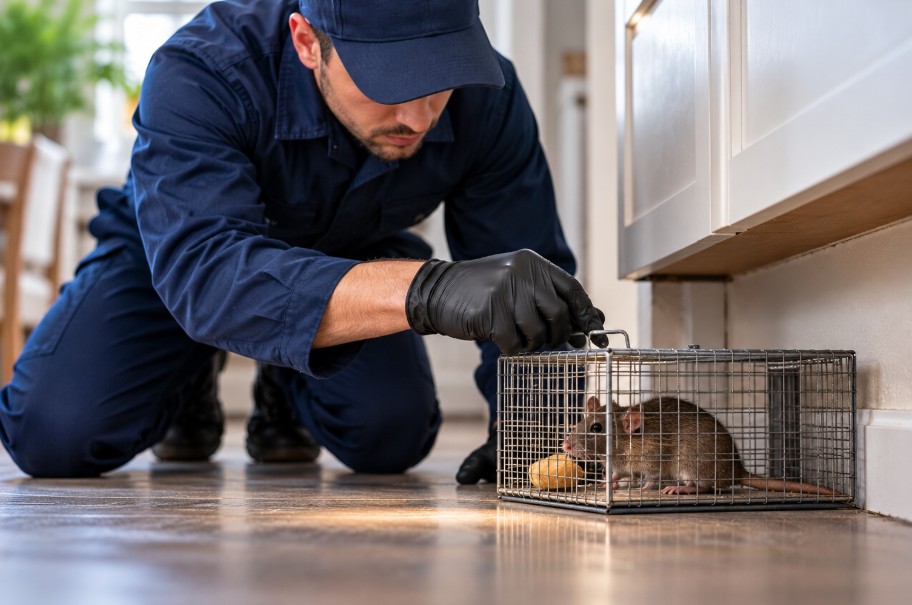
Rat Control in Lincoln, NE — Norway Rats Removed From Your Home and Yard
A rat isn't a big mouse. It digs, it avoids anything new for days, and it'll keep coming back to a yard that feeds it. Lincoln Rodent Control Co. removes rats from Lincoln homes, garages, coops and businesses, shuts down the burrows they live in, and fixes what drew them in.
Rats in Lincoln Are Outdoor Animals That Come In
In Lincoln, rat problems usually start outside. Norway rats typically live in burrows under a slab, a shed, a stoop or a woodpile, and forage into the garage, coop or basement at night. That's why getting rid of rats here means more than setting traps in the kitchen — it means finding the burrow system, removing the colony, and taking away the food, water and cover that made your yard worth moving into.
The Norway Rat: The Only Rat You're Likely to Have in Lincoln
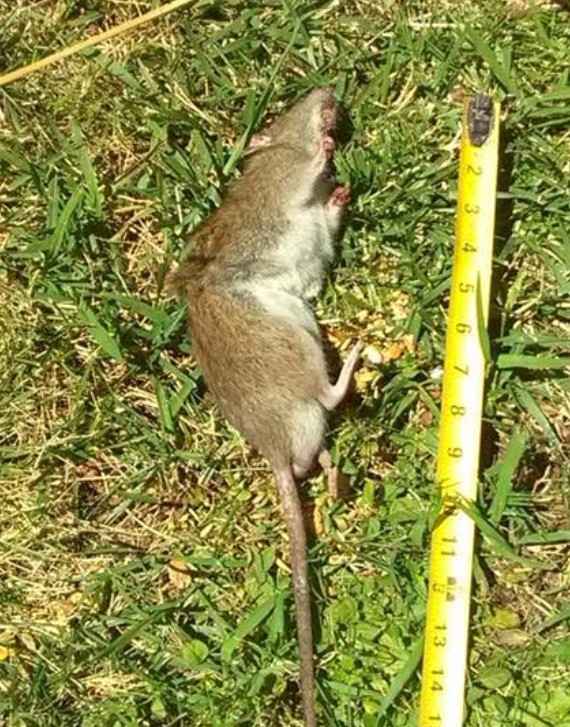
Nebraska Extension notes that Norway rats live in and around cities, towns and farms across Nebraska, while the state is outside the range of roof rats. So if you have rats in Lincoln, it's almost certainly a Norway rat — also called the brown rat or sewer rat.
| Trait | Norway rat |
|---|---|
| Body length | 7–12 inches, plus a 6–9 inch scaly, nearly hairless tail |
| Weight | Up to about 1 pound |
| Fur | Coarse; reddish-brown, gray or nearly black |
| Entry gap | Any opening larger than 1/2 inch |
| Food | About 10% of its body weight a day; prefers grain, seed, pet and livestock feed and meat |
| Water | Needs to drink daily — about 1 to 2 ounces |
| Breeding | Mostly spring and fall; 6–12 young per litter, 4–6 litters a year |
| Maturity | Ready to breed at about 3 months |
| Burrow entrance | 2–3 inches across, with smooth, packed ground from use |
Is It Really a Rat? Common Look-Alikes in Lincoln
Young rat vs. adult mouse
A young rat has a big head and big feet for its body; a mouse has large ears and a small, pointed head. Rat droppings are about 3/4 inch long with blunt ends; mouse droppings are 1/8 to 1/4 inch and pointed.
Eastern woodrat (packrat)
A native rat found in the wild along Nebraska rivers and streams, with a furry, two-toned tail instead of a scaly one. They're usually found in wooded areas along streams, not under garages and slabs.
Voles
Small, stocky, short-tailed rodents that leave runways in lawns. They're often mistaken for young rats but don't burrow under slabs or come indoors much.
Fox squirrels
If the noise is in the attic early in the morning and late in the afternoon, it's more likely a squirrel than a rat. Norway rats are diggers and usually stay low.
Not sure what you're seeing? A photo of droppings, a burrow or the animal helps us tell you quickly.
Signs of Rats Around a Lincoln Property
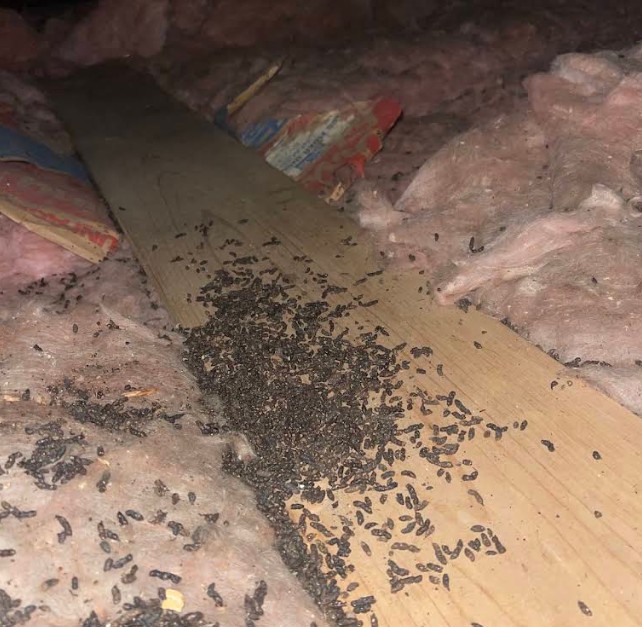 Diagnostic Indicator: ~3/4" blunt-ended Norway rat droppings identified in a Lincoln home
Rats leave a lot of evidence outside before you ever see one indoors.
Because Norway rats are neophobic (fearful of new things) and travel along established perimeter walls and fences, early physical inspection of burrows, runways, and rub marks provides 100% confirmation before indoor contamination occurs.
In the Yard
- Burrow holes about 2–3 inches across along the foundation, under stoops, patios, sheds, AC pads and woodpiles. Active holes are clean and smooth; fresh dirt may be kicked out in a fan.
- Bolt holes — a second or third opening a few feet from the main burrow, used for escape.
- Runways — narrow paths worn bare through grass or along fences and walls, used night after night.
- Digging under the chicken run, dog kennel, compost bin or garden bed.
Around the Garage, Shed and Coop
- Chewed corners on the overhead garage door or the bottom of a wooden shed door
- Gnawed feed bags, birdseed bags or plastic bins
- Missing eggs, or chicks and feed disappearing from the coop
- Dark, greasy rub marks along walls, sill plates and the bottoms of joists
Inside the House
- Droppings about 3/4 inch long with blunt ends, often in groups
- Heavy thumping or scratching low in walls, under floors or in a crawl space at night
- Chewed pipes, wiring or drywall near the floor
- Pets — especially dogs — fixating on a spot along the foundation or a floor vent
Seeing a Rat in Daylight
Severe Population IndicatorRats are mainly active at night. Seeing one during the day often means the population has grown large enough that some are forced out at off hours, or that it's been disturbed. Either way, it's time to call.
Where We Remove Rats From in Lincoln
Norway rats in Lancaster County exploit specific architectural micro-environments. We deploy specialized trapping and burrow excavation tailored to each structure:
Under Slabs, Stoops and Patios
The space under a concrete stoop, patio, sidewalk or AC pad is a favorite rat home — dry, protected and next to the house. We locate every entrance and bolt hole, remove the rats using them, and close the burrows so the void can't be reused.
Garages
Attached and detached garages give rats shelter plus a food supply — birdseed, grass seed, dog food and trash carts. We trap along the walls rats travel, and check where the slab has heaved and left a gap under the overhead door.
Basements and Crawl Spaces
Rats come in at ground level through foundation cracks, gaps around pipes and old openings in older basements. In crawl spaces, they burrow into dirt floors and tear vapor barriers. We work these spaces with anchored traps and find the entry from both sides of the wall.
Chicken Coops and Runs
Lincoln allows backyard hens, and coops draw rats with spilled feed, water and eggs. Rats will take eggs and even young birds. We set traps the hens can't reach, track down burrows under the run, and show you how to rat-proof the coop and store feed.
Sheds, Woodpiles and Outbuildings
Wood-floored sheds sitting on the ground, stacked firewood and lumber, and outbuildings on acreages are common nesting sites. We remove the rats, close the burrow system underneath, and recommend changes like raising woodpiles off the ground.
Gardens, Compost and Bird Feeder Areas
Rats dig under raised beds and compost bins and feed on fallen birdseed. We trap along these feeding sites and help you cut off the food that's keeping them there.
Walls, Ceilings and Floors
Less common than mice in walls, but rats do get into lower walls, floor voids and drop ceilings — especially in basements and older buildings. We trap at their exit points rather than tearing out drywall.
Behind Restaurants, Stores and Apartment Buildings
Dumpster pads, loading areas and trash enclosures feed rats around businesses and multi-unit buildings. We set locked exterior stations, find burrows along pavement edges, and keep records for property managers and health inspections.
What Draws Rats to a Lincoln Yard
Rats settle where they find three things close together: food, water and a safe place to dig. Take any one away and the yard becomes a lot less attractive.
Backyard Hens and Their Feed
Lincoln lets residents keep a small number of hens without a permit, and more with a fowl permit from the Lincoln-Lancaster County Health Department — whose application asks how manure and waste will be handled. Spilled feed, open feeders, water fonts and eggs make coops a strong rat attraction. Metal feed bins, treadle feeders and a coop floor rats can't dig under make a big difference.
Bird Feeders
Seed hulls and dropped seed under feeders feed rats every night. Squirrel-style baffles don't stop rats from eating what falls on the ground.
Pet Food and Dog Runs
Kibble left out, open bags in the garage and spilled food around kennels are easy meals. Nebraska Extension notes that rat problems around homes are often tied to the food, water and shelter provided for pets.
Water
Unlike mice, rats need to drink every day. Dripping hose bibs, pet water bowls, birdbaths, ponds, AC condensate and low spots that hold rainwater can all keep a colony going.
Compost, Gardens and Fallen Fruit
Open compost with food scraps, vegetable gardens, and fruit or nuts left on the ground in late summer and fall all draw rats.
Cover Next to the House
Woodpiles, lumber, stacked pavers, dense shrubs against the foundation and clutter behind the garage give rats protected places to burrow right beside your walls.
Creeks, Drainage Ways and Alleys
Homes that back onto Salt Creek, Antelope Creek, Dead Man's Run, drainage channels or alleys with shared trash carts see more rat pressure, because rats can travel and shelter along those corridors.
How Our Rat Removal Works
Rat removal is a short campaign, not a single visit. Rats are cautious and social, and the job isn't done until the whole colony is gone and the burrows are closed.
Map the Colony
We walk the whole property — foundation, garage, sheds, coop, fences, woodpiles — and mark every burrow, bolt hole and runway. To tell active burrows from old ones, we loosely plug them with paper or soil and check which ones get reopened.
Cut Off the Food First
Traps compete with whatever else rats are eating. Before we set anything, we'll point out the feed, seed, pet food, water and trash that need to be put away or locked up. This step alone can make trapping work much faster.
Let the Rats Get Used to the Traps
Rats avoid new objects, sometimes for up to two weeks. We set heavy-duty rat traps inside locked stations along their runways, unarmed at first and baited, so the colony learns they're safe to visit.
Arm Everything at Once
Once rats are feeding, every trap gets armed on the same night. That catches as many as possible before the rest grow wary. Traps are anchored so a rat can't drag one off, and we use more than seem necessary.
Check, Remove, Reset
We come back on a set schedule to remove catches, reset traps and move ones that aren't producing. Every rat is taken off your property.
Outdoor Bait Stations, Only When They Fit
For large outdoor colonies — around a business dumpster area or an acreage outbuilding, for example — locked, anchored bait stations placed outside can be part of the plan. Never loose bait, never inside your home, and never where kids, pets or hens can reach it.
Close the Burrows and the Way In
Once burrows stay closed, we collapse and fill them, and add a buried hardware-cloth barrier along slab edges where rats keep digging. Openings into the house or garage bigger than 1/2 inch get sealed with metal and mortar (see our rodent exclusion service).
Confirm They're Gone
We recheck the property for new burrows, fresh droppings and reopened holes. The job is done when the site stays quiet over consecutive visits, not after the first good night of catches.
How Long It Takes
A small group of rats under one stoop can be handled in a couple of weeks. An established colony across a yard, coop and garage usually takes several weeks, mostly because of how cautious rats are around new traps.
Why Rats Shouldn't Be Left Alone
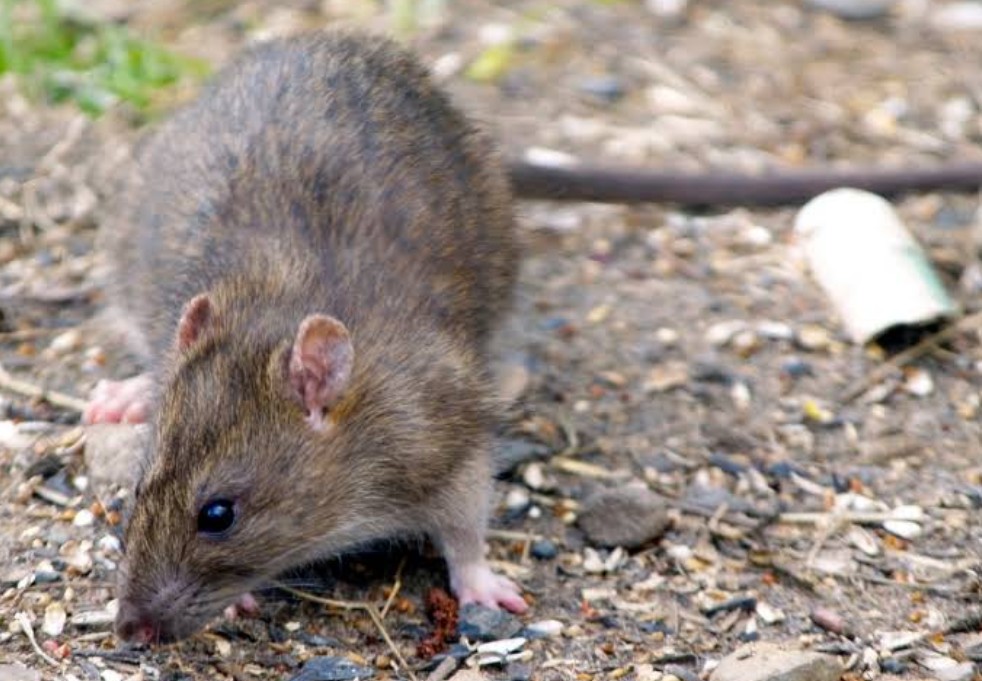
Rapid Colony Multiplication
Leaving rats alone in Lincoln guarantees two outcomes: progressive foundation undermining from active burrow networks and exponentially increasing disease exposure for your family, pets and backyard flocks.
Health Risks
- Leptospirosis. Spread through rat urine, often by contact with contaminated water, soil or surfaces through broken skin, eyes or mouth. It's rare in the U.S. — the CDC counts roughly 100 to 200 reported cases a year — but it can be serious. It's a reportable disease in Nebraska, and in Lancaster County cases are reported to the Lincoln-Lancaster County Health Department.
- Salmonella. Rats contaminate feed, stored food and surfaces with droppings and urine.
- Rat-bite fever. A bacterial infection that can follow a bite or scratch, or handling a rat.
- Fleas and mites that rats carry into garages, coops and homes.
If you find rat droppings, wear gloves, spray them with disinfectant until wet, let them soak, and wipe up with paper towels. Don't sweep or vacuum them dry.
Damage to Your Property
- Burrowing under slabs, stoops, sidewalks and garage floors can wash out the soil underneath and leave concrete unsupported.
- Gnawing on electrical wires, water lines, doors, siding and garage door bottoms. Nebraska Extension lists wires, pipes, doors, walls and floors among the things rats chew.
- Feed and food loss. A rat eats about a tenth of its body weight every day and contaminates much more than it eats.
- Poultry losses. Rats take eggs and can prey on young birds in backyard coops.
- Vehicles and equipment. Rats nest in and chew wiring on stored cars, mowers and farm equipment.
Why Rats Beat Most DIY Efforts
Norway rats possess keen neophobic defense mechanisms. Common store-bought traps and home remedies fail to eliminate Lincoln colonies for clear behavioral and biological reasons:
They Avoid New Things
A trap that shows up armed on day one usually catches one rat at most — and teaches the rest to stay away. Nebraska Extension notes rats may wait up to two weeks before touching new traps or bait.
One or Two Traps Isn't Enough
Extension guidance is to use more traps than you think you need. A colony spread across a yard, garage and coop needs traps on every runway at once.
Cage Traps Don't Work Well on Rats
Nebraska Extension doesn't recommend cage or multiple-catch traps for rats — they're less effective than snap-style traps. And a live rat released down the street is just your neighbor's problem, or yours again.
Poison Comes With Problems
- A poisoned rat often dies where you can't reach it — under a slab, inside a wall or under the floor — and the smell can last for weeks.
- Dogs, cats, hawks and owls can be poisoned by eating a poisoned rat, and backyard hens can get into bait that isn't secured.
- Federal rules limit which rat poisons homeowners can buy and require consumer products to come in bait stations, not loose. The strongest products are restricted to licensed applicators.
- Poison doesn't close a single burrow or seal a single gap, so new rats move into the same spot.
Repellents and Ultrasonic Devices Don't Work
Nebraska Extension says no repellents are known to be effective on rats, and there's little evidence for ultrasonic, sound, magnetic or vibration devices. Rats get used to repeated sounds quickly.
The Cat or Dog Won't Solve It
Cats and dogs may kill an occasional rat, but they don't control a colony — and pet food and water are often what's feeding the rats in the first place.
When the Rats Aren't Only on Your Property
Rats don't respect property lines. A colony living under one garage can forage into the yards around it.
Neighbors
If rats are coming from next door, removing them from your yard still helps — but closing your burrows and sealing your garage matters even more, because new rats will keep arriving. It often helps when neighbors deal with feeders, coops and woodpiles at the same time. We're glad to talk with a neighbor if you'd like.
Renters and Landlords
Under Lincoln's housing code, landlords are responsible for preventing rodent infestations and for getting rid of them, unless that duty has specifically been put on the tenant. If you rent and have rats, tell your landlord in writing. If you own rentals, we work directly with owners and property managers and document every visit.
Conditions That Draw Complaints
The Lincoln-Lancaster County Health Department responds to complaints about garbage and other conditions that harbor disease carriers like rodents. If a neighboring property's trash or junk is feeding the rats, that's who handles it. We remove the rats on your side and keep them from getting back in.
Businesses
Restaurants, grocery stores and food warehouses in Lincoln are inspected by the health department, and rodent evidence can lead to citations. We set locked exterior stations around dumpsters and loading areas, seal building entries and keep service records you can show an inspector.