
Mice Control in Lincoln, NE — Every Mouse Out, and the Way In Closed
Mice are small, quiet and fast-breeding, and by the time one runs across your kitchen floor, there are usually more behind the walls. Lincoln Rodent Control Co. removes mice from Lincoln homes, garages and businesses, cleans up after them safely, and closes the gaps that let them in.
- Licensed & Insured
- Open 24/7
- About 60-Minute Response
- No Poison in Your Living Space
- Safe Droppings Cleanup
- Lincoln-Based
Saw One Mouse? You've Probably Had Them a While
A University of Nebraska–Lincoln wildlife specialist puts it plainly: if you're seeing a mouse in the open in your kitchen, chances are you've had mice for a while, because they live inside the walls well before they start exploring the rooms. In Lincoln, that usually starts in fall. As nights get colder, mice spend more energy staying warm and go looking for a warmer place to cut their calorie needs — and the heat escaping from a house is exactly what draws them in.
Which Mouse Is in Your Lincoln Home?
It matters, because the cleanup precautions are different.
House Mouse
The mouse in most Lincoln kitchens, walls and basements. Light gray, with relatively large ears and small black eyes, about 5½ to 7½ inches long including a 3- to 4-inch tail, and weighing only half an ounce to an ounce. House mice aren't native to North America, and they live almost entirely around people — homes, farms and town lots. Nebraska Extension notes they're uncommon in undisturbed areas away from farms and towns.
Deer Mouse and White-Footed Mouse
Brown on top with a sharp white belly and white feet, and bigger eyes and ears than a house mouse. These native mice live mostly outdoors and in sheds, garages, campers and cabins, and they're far more common on acreages and at the edge of town than in central Lincoln. They're the reason we treat cleanup seriously: Nebraska Extension identifies deer mice and white-footed mice as known carriers of hantavirus, while house mice are not.
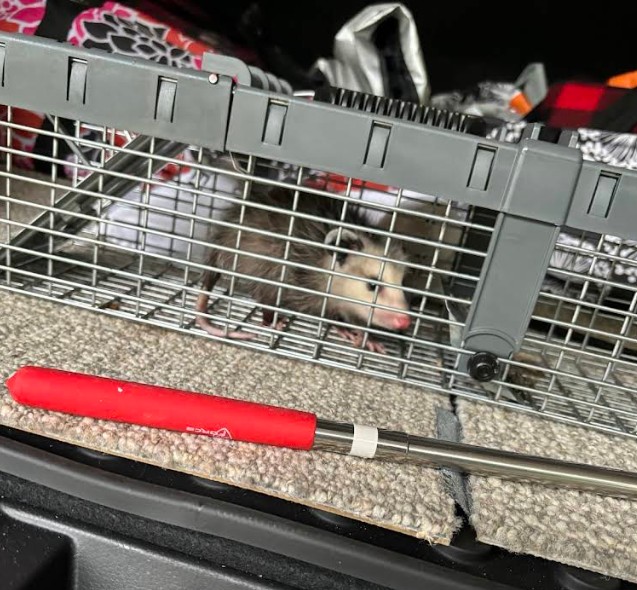
Not a Mouse at All?
- A young rat has a bigger head and feet for its body, and leaves larger droppings with blunt ends.
- A vole is stocky with a very short tail and small eyes. Voles live in lawn runways and rarely come indoors.
Why a Few Mice Turn Into a Lot of Mice
According to Nebraska Extension, in good conditions a single female house mouse can raise 5 to 10 litters a year, with 5 or 6 young in each. Babies are born 18 to 21 days after mating and can breed themselves in as little as 6 to 10 weeks. A pair that slips in during October can have grandchildren in your walls before spring.
What a House Mouse Can Do
- Squeeze through an opening just over 1/4 inch wide
- Climb any rough vertical surface — brick, stucco, siding, the inside of a wall
- Jump 10 inches straight up onto a counter, or across a 3-foot gap
- Run 4 to 6 miles per hour and survive a 9-foot fall
- Live without a water source, getting moisture from food
- Get by on about a tenth of an ounce of food a day, nibbled in small bits
That's why mouse problems aren't only a basement issue. Mice can come in at the roofline as easily as the foundation.
Lincoln's Mouse Year
Nights cool down and field mice head for buildings. This is when many Lincoln homeowners first notice droppings or scratching.
Mice that got in are settled near heat — furnaces, water heaters, refrigerators — and breeding indoors.
Mice that weren't dealt with over winter have had months to breed, so activity often spreads to more rooms.
Fewer new arrivals, but mice already inside keep breeding. A good time to seal before fall.
Where We Remove Mice From in Lincoln Homes
Mice rarely travel more than about 50 feet from their nest and food, and they nest near warmth. So we start our search close to food and heat and work outward.
◆ Behind and Under Kitchen Appliances
Refrigerators, stoves and dishwashers give mice heat from motors and coils, crumbs underneath and hidden space behind. Nests here are often made of shredded paper, insulation or fabric tucked into the appliance base or the wall cavity behind it.
◆ Pantries, Drawers and Cabinets
Mice chew clean, round holes about 1½ inches across in cereal, cracker and pet food boxes, and leave droppings along the back of shelves and in utensil drawers. The toe-kick space under lower cabinets is a common highway.
◆ Inside Walls
In older Lincoln homes, wall cavities often run from the basement up to the attic with nothing to stop a mouse. Scratching, squeaking or a pet staring at one spot on the wall usually means mice are traveling or nesting inside. We remove them where they come out — at pipe gaps, behind appliances, under cabinets — instead of opening the wall.
◆ Attics and Ceilings
Mice tunnel through and nest in insulation, especially along the eaves where they come in. Light footsteps overhead at night, or droppings on top of the insulation, point to the attic.
◆ Basements and Crawl Spaces
The sill plate along the top of the foundation wall is one of the most-used mouse routes in any house. Stored boxes, holiday decorations and old furniture make ideal nests. Furnaces and water heaters run constantly and are favorite den sites.
◆ Utility Rooms, Ductwork and Dryer Vents
Mice follow pipes and wires through the wall and can travel through ductwork. Cold-air returns in basements and garages are a common entry into the heating system.
◆ Garages
The gap under a worn overhead door seal, stored birdseed and grass seed, and boxes along the walls make the garage a common first stop for mice on their way into the house.
◆ Cars, Campers and Stored Equipment
Vehicles, RVs, boats and lawn equipment parked through the winter collect nests in air filters, engine bays, glove boxes and upholstery — and chewed wiring can be costly to repair.
◆ Offices, Restaurants and Rentals
Drop ceilings, break rooms, storage rooms and shared walls between apartments all give mice room to spread. We work through the whole building, not just the unit that called.
How to Tell It's Mice
Droppings scattered, not piled. A house mouse leaves roughly 50 to 75 droppings a day as it explores. They're 1/8 to 1/4 inch long, usually black, with one or both ends pointed, and spread out along walls, in drawers and on shelves.
Tiny tooth marks. Fresh gnawing about 1/32 inch wide on food packaging, baseboards, soap or wiring.
Clean round holes about 1½ inches across in cardboard boxes and bags.
Nests of finely shredded material — paper, fabric, insulation — near a heat source.
Sounds in walls and ceilings. Scratching and squeaking at night. People are often surprised how much noise a few mice can make.
A musky, stale smell where mice have been living for a long time.
Pets on alert. Dogs and cats sniffing, staring or scratching at one spot on a wall or under an appliance.
Daytime sightings. Mice are most active after dusk and before dawn, so seeing one in daylight often means there are a lot of them.
How We Get Rid of Mice

Start Where They Eat and Sleep
We begin inside a 50-foot circle around food and heat — kitchen, pantry, furnace, water heater — then follow droppings, rub marks and gnawing out to the walls, attic, basement and garage. That tells us where the nests are and how far the mice have spread.
Use Enough Traps — More Than You'd Expect
Underestimating how many mice are present is one of the most common mistakes in rodent control. Nebraska Extension's rough guide is about two dozen well-placed snap traps for a new infestation in a 1,500-square-foot home, and a UNL wildlife specialist recommends at least a dozen for even a modest problem. We place traps no more than about 10 feet apart where mice are active, and in busy spots we set them in pairs.
Put Every Trap Where a Mouse Has to Cross It
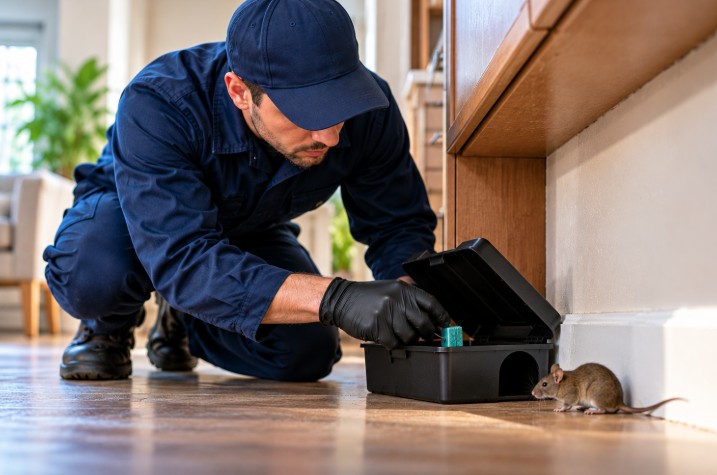
Mice keep their whiskers against walls as they move. Traps go tight to walls, behind appliances and in dark corners, with the trigger in the mouse's path. We use expanded-trigger traps, which catch more mice than standard triggers, inside closed stations wherever kids or pets could reach them.
Keep the Trap Line Fresh
Nebraska Extension notes that female mice tend to avoid traps that have caught dominant males. So on each check visit we remove catches and swap in clean traps, not just reset the old ones, until both males and females are gone.
Close the Gaps
Trapping clears the mice inside; sealing stops the next ones. Every opening 1/4 inch or larger gets closed with copper mesh, metal or mortar, finished with sealant so warm air stops leaking out and drawing more mice in. (See our rodent exclusion service.)
Clean Up Safely
We remove nests and droppings using wet-cleaning methods — never sweeping or vacuuming dry — and disinfect the areas mice were using.
Confirm and Follow Up
We keep checking until traps stay empty and no fresh droppings appear, then remove every trap and station. Most single-family homes are cleared within a few weeks; heavy or long-running infestations can take longer.
Mice, Your Health and Safe Cleanup
What Mice Leave Behind
Nebraska Extension notes that house mice contaminate food meant for people and pets and can spread salmonellosis, and that mouse urine has been implicated as an asthma trigger for some people. Every mouse spreads droppings and urine along its route — across counters, shelves and the dishes in your cabinets.
Hantavirus in Nebraska
Hantavirus is carried mainly by deer mice, and is spread when dried droppings, urine or nesting material are stirred into the air and breathed in. It's rare in Nebraska. The first Nebraska case, reported in the late 1990s, involved a man who had been cleaning out grain bins and trucks, and state testing in 2002 found the virus in roughly 5 to 15 percent of deer mice sampled. The risk is higher in sheds, barns, cabins and garages on acreages — where deer mice live — than in a typical city kitchen. House mice aren't known to carry it.
How to Clean Up Mouse Droppings Safely
Nebraska Extension's steps:
- 1 Put on waterproof gloves.
- 2 Spray the droppings, nest or dead mouse with household disinfectant or a 10 percent bleach solution until wet.
- 3 Wipe up with a wet towel or rag — never sweep or vacuum, which puts particles in the air.
- 4 For a dead mouse, turn a sealable bag inside out over your hand, pick it up, turn the bag right side out and seal it.
- 5 Throw everything away in an outdoor trash can, disinfect the spot, remove gloves inside out and wash your hands.